Cosmetic Stability Testing: A Practical Guide for Skincare Brand Buyers
Cosmetic stability testing helps a skincare buyer decide whether a defined formula and packaging combination remains acceptable through the conditions relevant to its intended storage and use. It belongs early in product planning because a change in formula, pack or market requirements can affect what must be reviewed before commercial approval.
What is cosmetic stability testing?
Cosmetic stability testing is a structured assessment of how a defined cosmetic formula changes over time under relevant conditions. It may track appearance, color, odor, texture, viscosity, pH, separation and interaction with the intended packaging. The test plan and acceptance criteria should match the product, pack, intended market and storage conditions; one universal protocol does not fit every cosmetic.
For brand owners and importers, the practical question is not simply whether a sample “looks fine.” It is whether the tested version is clearly identified, whether observations match agreed criteria, and whether the evidence supports the decision the buyer needs to make.
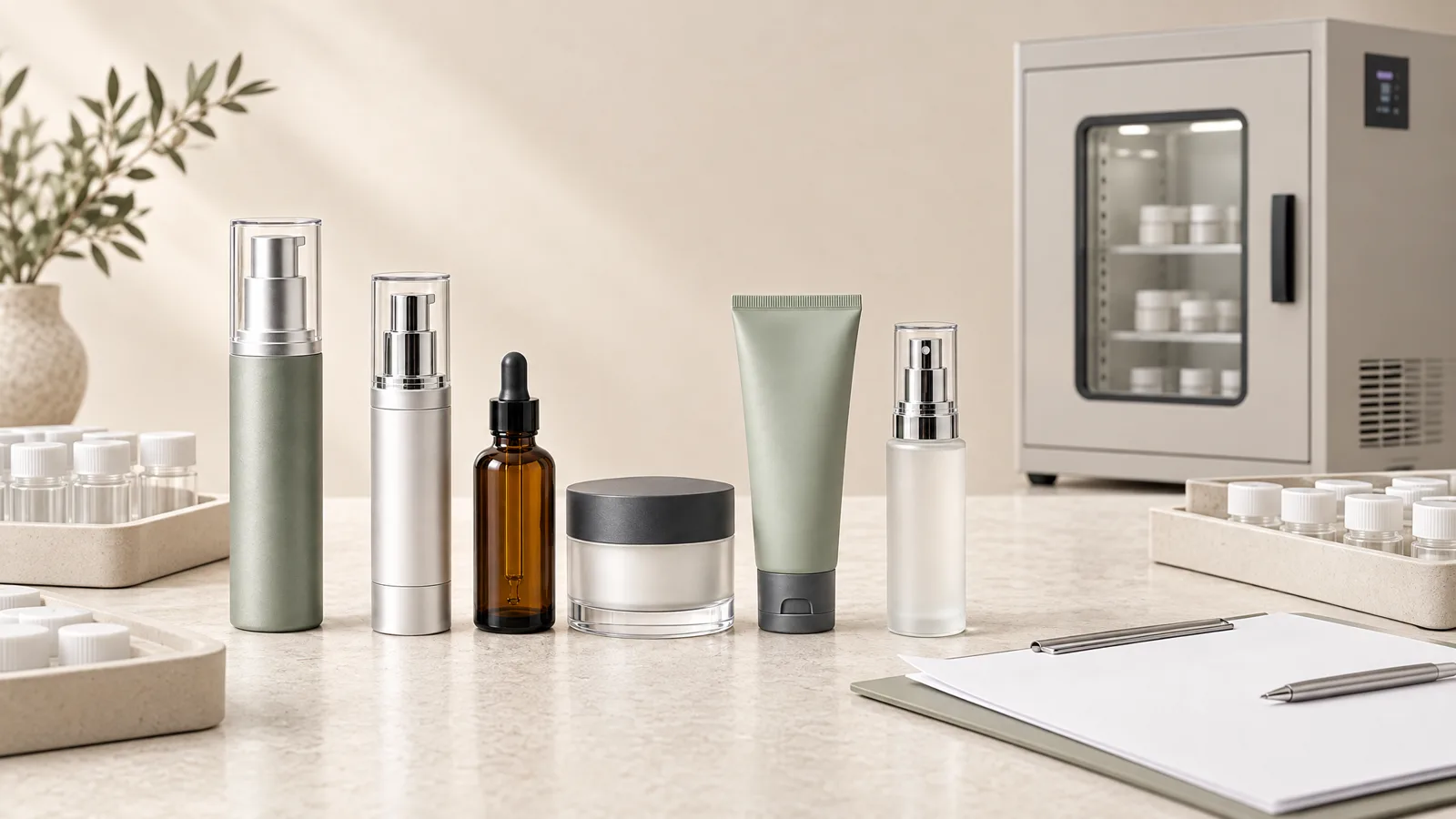
Why does stability planning matter to a skincare buyer?
Stability work connects product development with packaging selection, documentation and launch control. It can reveal changes that require investigation before a buyer approves a formula or pack for the next project stage.
A useful review asks:
- Which exact formula and packaging versions were assessed?
- Which conditions reflect expected storage, distribution or use?
- Which attributes were observed or measured?
- What were the predefined acceptance criteria?
- Were deviations investigated and documented?
- Would a change require an appropriate level of reassessment?
The U.S. FDA explains that cosmetic shelf life depends on the product, its use and storage, and notes that companies may expose samples to different temperatures and humidity levels to understand how conditions affect them. FDA does not prescribe one test list for every cosmetic. In the EU, Regulation (EC) No 1223/2009 requires the cosmetic product safety report to address physical and chemical characteristics and stability under reasonably foreseeable storage conditions.
What may be observed during a cosmetic stability test?
The attributes selected should follow the product and the decision being made. The table below is a buyer-oriented discussion guide, not a universal specification.
| Attribute | What a change may indicate | Buyer review question |
|---|---|---|
| Appearance | A visible shift in uniformity, clarity or overall presentation | Is the observation method and acceptable range defined? |
| Color | Formula, ingredient, light or packaging-related change may need investigation | Was color assessed consistently against an identified reference? |
| Odor | A change may signal degradation, ingredient interaction or another issue | Who evaluates odor and how is the result recorded? |
| Texture | The sensory or physical profile may no longer match the approved reference | Is texture assessed descriptively, instrumentally or both? |
| Viscosity | Flow and dispensing behavior may change | Are the method and measurement conditions documented? |
| pH | A shift may affect product characteristics and requires product-specific interpretation | Is the method appropriate for the formula type? |
| Separation | An emulsion, suspension or multi-phase system may lose uniformity | What degree of separation, if any, is acceptable? |
| Packaging interaction | The product or pack may show leakage, deformation, discoloration or dispensing problems | Was the intended container, closure and dispensing system assessed together? |
No single attribute proves that a cosmetic is safe or suitable for every market. Results must be interpreted with the rest of the product information by appropriately qualified people.
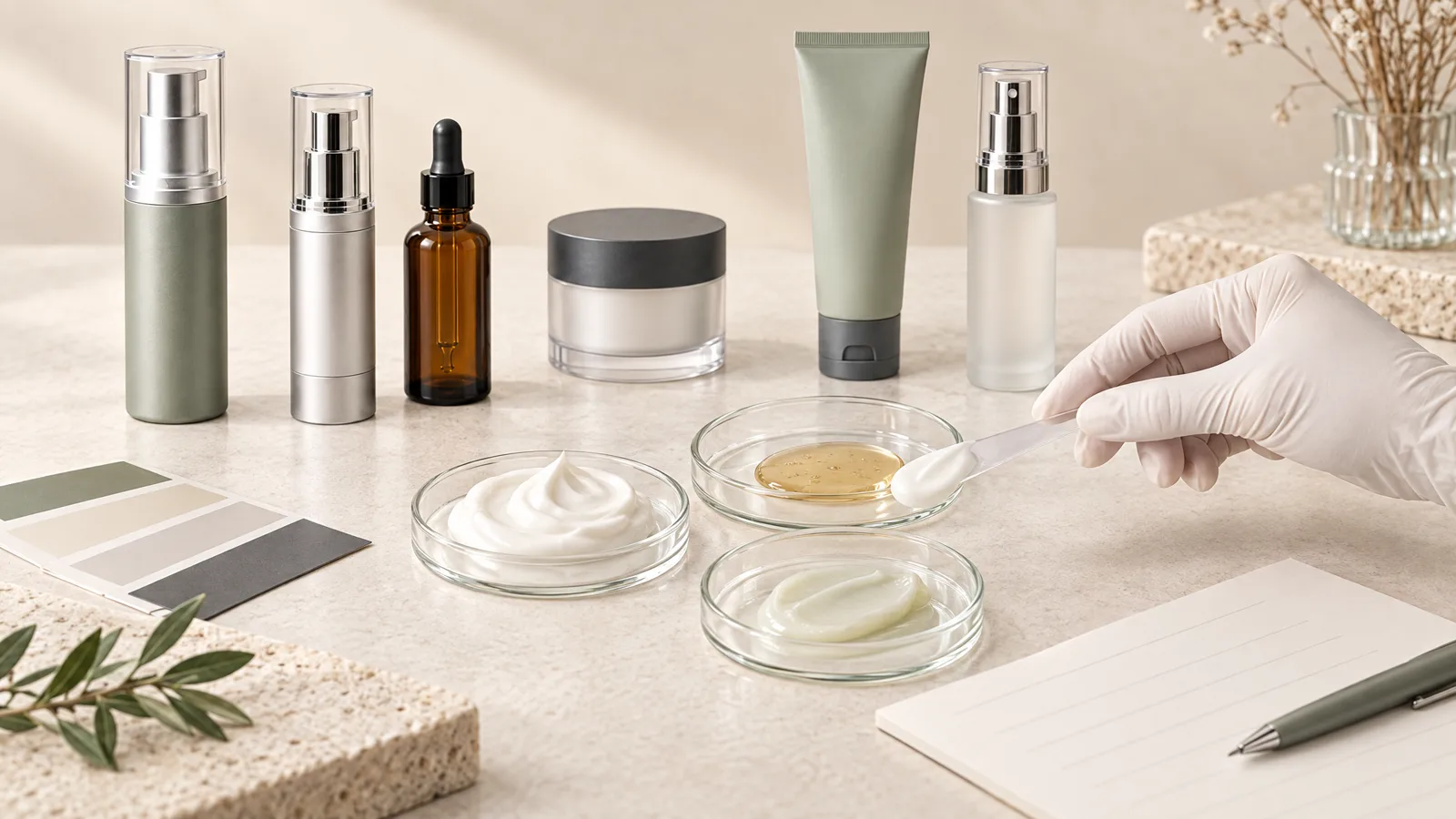
Formula stability and packaging compatibility: how are they different?
Formula stability concerns whether the product’s relevant physical and chemical characteristics remain within defined expectations. Formula/package compatibility concerns whether the product and its intended container, closure and dispensing system remain suitable together.
| Assessment | Primary focus | Typical buyer concern | Relationship |
|---|---|---|---|
| Formula stability | Changes within the defined formula | Appearance, odor, texture, viscosity, pH or separation | A formula can appear stable in one container while the intended pack still needs review |
| Formula/package compatibility | Interaction between product and intended pack | Leakage, deformation, discoloration, closure fit, dispensing or material interaction | Packaging can influence observed stability and product usability |
The two assessments are connected but not interchangeable. A packaging decision should identify the exact bottle, jar, tube, closure, pump or dropper version. For wider packaging-selection criteria, see Aiyan Bio’s Luxury Skincare Packaging Guide.
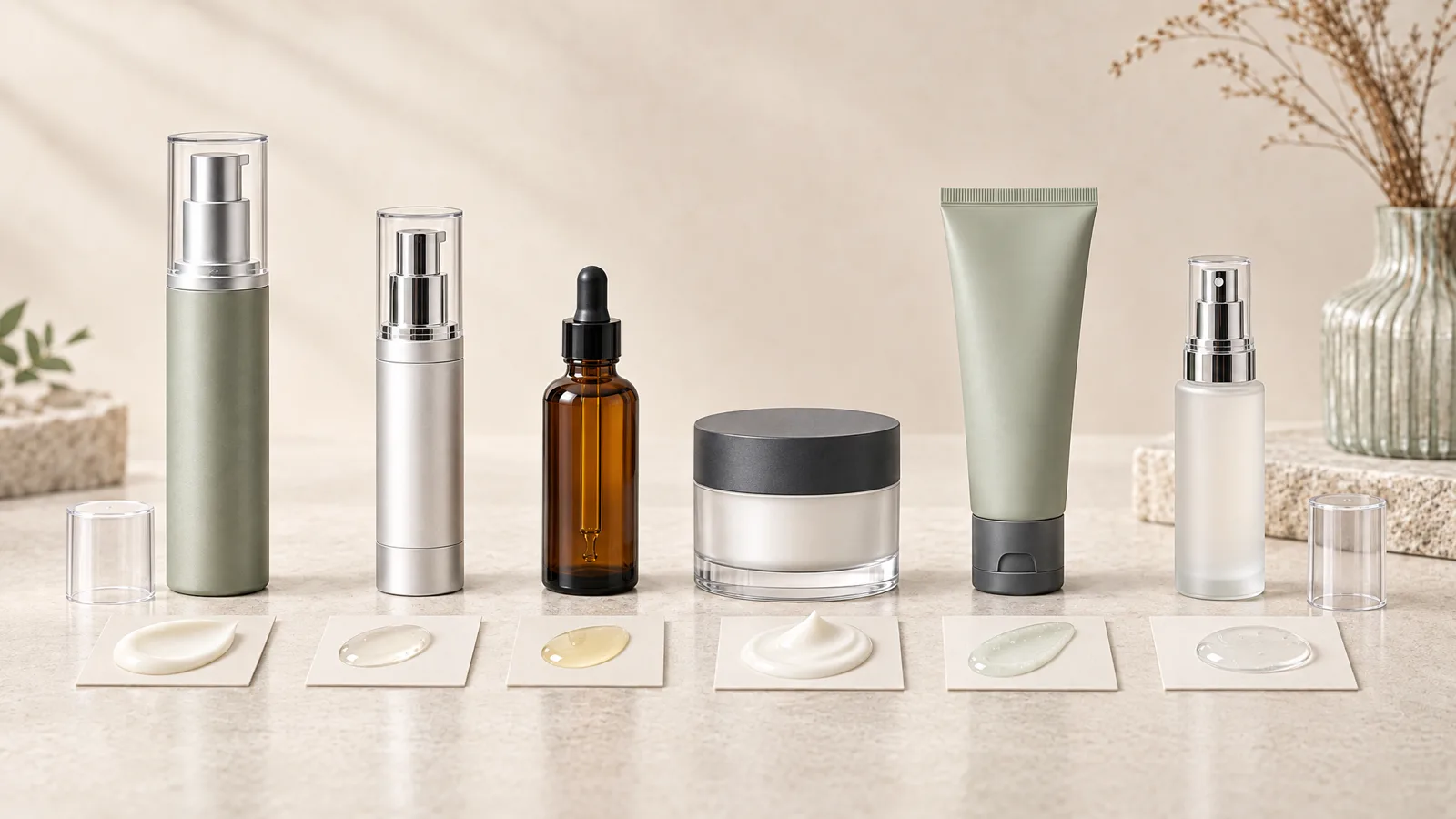
Stability testing is not the same as every other cosmetic test
Buyers should keep the testing entities separate when reviewing supplier documents or project plans.
| Testing or assessment entity | Main question | Why it remains separate |
|---|---|---|
| Stability assessment | Does the defined product remain within agreed physical and chemical expectations under relevant conditions? | It does not by itself establish microbiological quality or overall safety |
| Packaging compatibility assessment | Do the defined formula and intended pack remain suitable together? | It focuses on product–pack interaction, not every characteristic of the formula |
| Microbiological testing | Does the sample meet relevant microbiological specifications? | Microbiological quality is a separate product-safety and quality domain |
| Preservative challenge testing | Does a preservation system perform under the defined challenge method? | It addresses preservation performance, not general physical or chemical stability |
| Safety assessment | Does the available evidence support product safety for the intended use and market? | It is a broader qualified evaluation; a stability result is only one input |
Passing one stability study does not guarantee regulatory approval, product safety or suitability for every market. The FDA states that companies marketing cosmetics are responsible for product safety and that FDA does not specify a mandatory test list for every cosmetic. EU requirements likewise place stability information within a broader cosmetic product safety report and safety assessment.
Which factors can influence cosmetic stability?
Temperature, light, air exposure, formulation, ingredients, packaging and storage can influence how a product changes. Their relevance varies by formula and use case.
Accelerated stability testing for cosmetics may be used to investigate change under selected conditions, but an accelerated study is not a universal shortcut with one fixed temperature or duration. The test design, interpretation and relationship to other evidence should be justified for the specific product.
Buyers should avoid copying a test schedule from an unrelated formula. A water-based serum, an emulsion, a cleansing oil and a shampoo can present different risks, packaging interactions and review priorities.
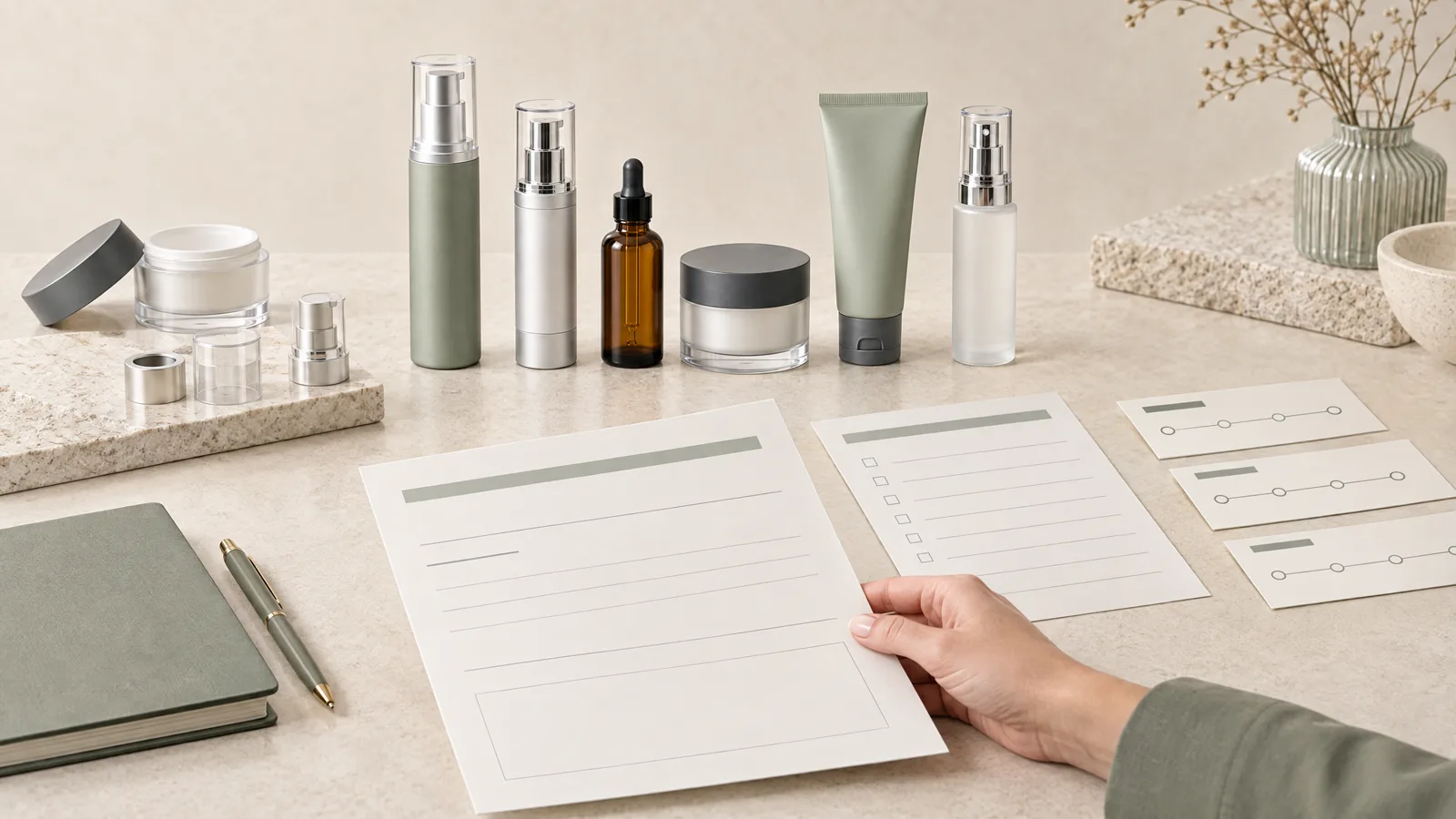
What should buyers include in a stability-testing brief?
Before work begins, align the sample identity and decision criteria. A clear brief reduces the risk of reviewing evidence from the wrong formula or packaging version.
Buyer checklist
- Formula name, version and date
- Product type and intended use
- Sample or batch identification
- Packaging component, closure and dispensing versions
- Intended market
- Intended storage and distribution context
- Relevant product attributes to observe or measure
- Proposed methods and review points
- Product-specific acceptance criteria
- Responsibilities for testing, review and approval
- Required report format and change-control records
Do not leave acceptance criteria until results arrive. They should be discussed before the assessment so that an unexpected result is investigated rather than rationalized after the fact.
What should buyers ask a manufacturer or testing partner?
The objective is to understand scope, traceability and decision ownership—not to collect unsupported assurances.
B2B supplier-evaluation checklist
- Which formula and packaging versions will the documentation identify?
- Who defines the protocol and acceptance criteria?
- Which observations or measurements are included, and why?
- How are samples labeled, stored and tracked?
- How are deviations, unexpected changes and invalid results handled?
- Who reviews the evidence and determines the next action?
- Which activities are performed by the manufacturer, a qualified third party or the buyer’s own specialist?
- What product or packaging changes would trigger reassessment?
- Which market-specific documents require separate regulatory or safety review?
If a supplier uses broad phrases such as “fully tested,” ask for the exact scope. Stability, compatibility, microbiological quality, challenge testing and safety assessment are different activities.
What happens when a result needs investigation?
A practical project workflow is:
- Investigate: confirm the observation, sample identity, method and circumstances.
- Review formulation and packaging: determine whether the formula, process, component or storage context may be relevant.
- Revise where justified: document the approved change and issue new version identifiers.
- Retest appropriately: decide which evidence must be repeated or supplemented for the changed version.
The answer should be proportionate to the change and the intended market. A major formula, packaging or production change may require renewed evaluation, but the exact scope should be set by qualified technical and regulatory decision-makers. This article does not provide a universal regulatory rule.
How does stability testing fit into product development?
Stability planning should connect to the broader development record rather than sit as an isolated report. Product briefs, formula versions, packaging specifications, sample approvals and change records should point to the same defined product.
Brand teams can use the How to Start a Skincare Brand guide to structure early decisions and the Private Label Skincare Manufacturing Process guide to understand the wider project sequence. Buyers comparing categories can also review the Product Catalogue.
Frequently asked questions
What is a stability test for a cosmetic?
It is a planned assessment of an identified cosmetic formula under relevant conditions, using defined observations or measurements and acceptance criteria. Its scope depends on the product, packaging, intended storage and the decision the evidence must support.
How do you stability-test a cosmetic formula?
Start by identifying the exact formula and packaging versions, relevant conditions, attributes, methods, review points and acceptance criteria. The protocol should be designed and interpreted by people with appropriate technical expertise. Do not apply a universal temperature, duration or pass criterion to every product.
Does passing a stability test prove a cosmetic is safe?
No. Stability information can support product evaluation, but safety also depends on ingredients, intended use, exposure, microbiological quality, packaging, claims and market-specific requirements. A qualified safety or regulatory assessment may be required.
When should stability be reassessed?
Reassessment should be considered when a relevant formula, ingredient, process, packaging component, supplier, specification or storage assumption changes. The scope should reflect the significance of the change and applicable market requirements.
Prepare a clearer product-development brief
Before requesting project feedback, document the formula direction, product type, intended market, packaging preference, expected order scale and the technical questions that remain open. Aiyan Bio can review the commercial project brief and clarify which information is needed for further discussion; this is not a claim that Aiyan Bio performs every testing activity described in this guide.
Submit Your Skincare Project Brief
Sources and technical boundary
- FDA: Shelf Life and Expiration Dating of Cosmetics
- FDA: Product Testing of Cosmetics
- European Union: Regulation (EC) No 1223/2009 on cosmetic products
- European Commission: Cosmetics legislation
These sources provide regulatory context, not product-specific legal advice. Requirements and appropriate evidence depend on the product and target market.