Luxury Skincare Packaging: B2B Selection Guide for Brands
Luxury skincare packaging is not simply a visual upgrade. For a brand owner, importer or private-label buyer, it is a set of connected decisions about formula fit, dispensing, decoration, shipping, labeling and the way a product is handled after launch. A heavy jar may look impressive but create freight and breakage concerns. A beautiful pump may still be wrong for a formula’s viscosity.
What is luxury skincare packaging? Luxury skincare packaging combines a deliberate material, format, finish and dispensing experience with reliable product protection and brand consistency. The right choice must suit the formula, target market, filling process, shipping route and buyer budget—not just look premium on a screen or sample table.
This guide gives B2B buyers a practical framework for comparing options and preparing a clearer packaging brief. If the product concept is still taking shape, start with the broader guide to starting a skincare brand, then return here when formula and pack decisions need to connect.
What Makes Skincare Packaging Feel Premium?
Premium perception comes from the whole interaction, not one decorative effect. Buyers usually notice six elements working together:
- Material: the surface, clarity and tactile quality of the primary pack.
- Weight: enough substance to feel intentional, balanced against freight and handling needs.
- Finish: gloss, matte, frosting, color and decoration that remain visually consistent across components.
- Closure: a cap, collar or overcap that aligns cleanly and feels secure.
- Dispensing experience: controlled output, comfortable use and a format suited to the formula.
- Visual consistency: bottles, jars, cartons and artwork that read as one range rather than unrelated parts.
A coherent standard bottle with restrained decoration can feel more credible than an elaborate pack with mismatched colors, unstable components or awkward dispensing.
How Should Brands Choose Packaging Materials?
Start with the product, market and supply chain. Material choice affects appearance and handling, but no material is universally “best.” Formula compatibility and component performance need to be evaluated for the actual pack.
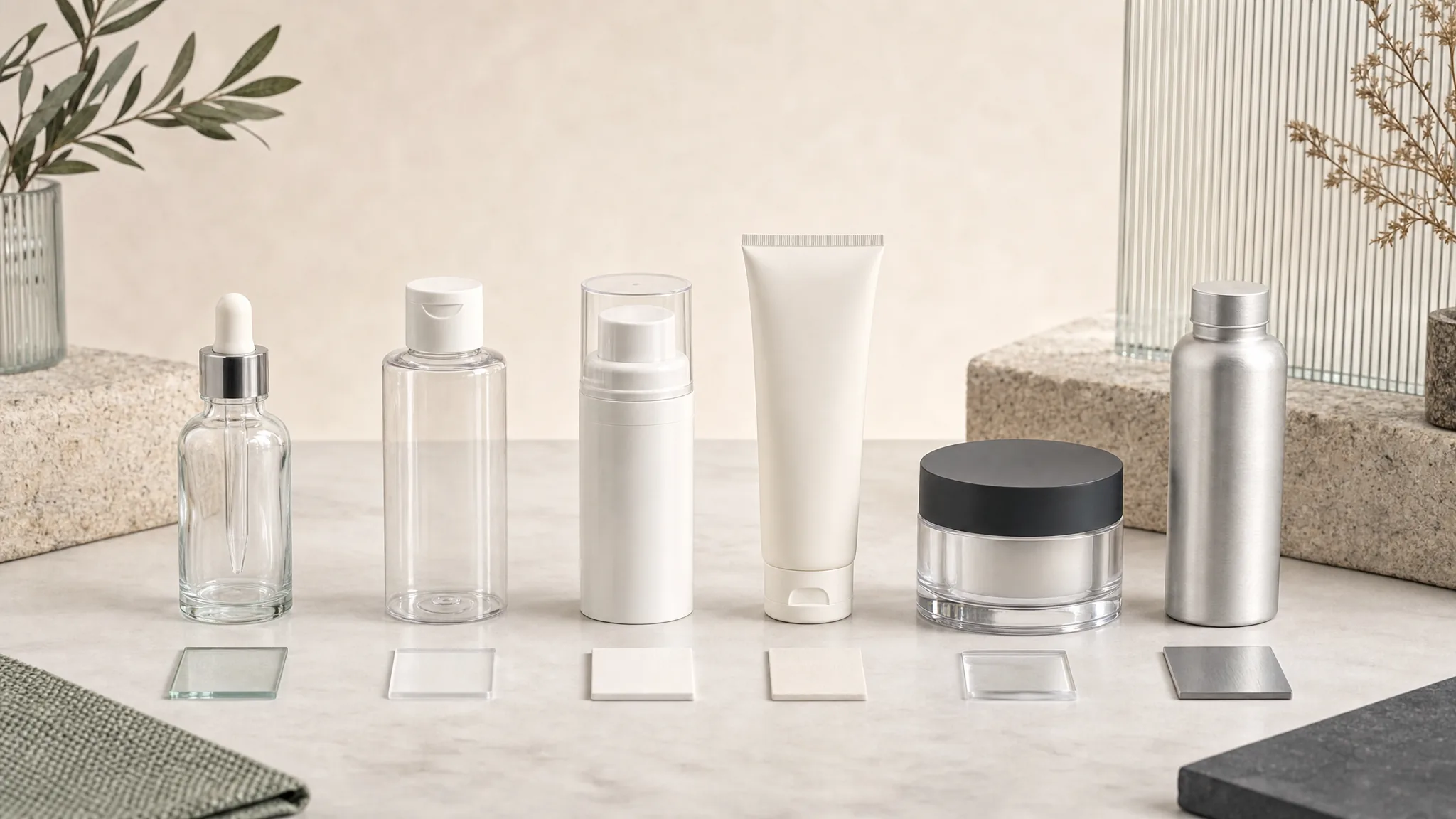
| Material | Advantages | Limitations | Typical Use | Buyer Considerations |
|---|---|---|---|---|
| PET | Clear, lightweight and available in many shapes | Surface feel and barrier needs vary by component | Bottles and jars | Check formula compatibility, color, wall feel and closure pairing |
| PP | Lightweight and commonly used for closures and airless components | Appearance differs from glass-like materials | Caps, jars, pumps and airless packs | Review dispensing mechanism, finish and recycling context in the target market |
| PE | Flexible and practical for squeezable formats | Less rigid and less glass-like | Tubes and flexible bottles | Consider squeeze force, panel decoration and product evacuation |
| Glass | Strong clarity, weight and premium tactile character | Heavier and vulnerable to breakage | Dropper bottles and jars | Assess shipping protection, closure fit and the actual formula |
| Acrylic | Thick-wall appearance and design flexibility | Often uses multiple components and can add complexity | Premium jars and outer shells | Clarify the product-contact layer, component count and decoration plan |
| Aluminum | Distinctive finish and useful light-blocking potential | Denting, lining and component compatibility require attention | Bottles, tubes and decorative shells | Review internal contact surfaces, closure system and transport handling |
Sustainability comparisons also depend on pack weight, component separation, local collection systems and the full supply chain. Avoid making environmental claims from material names alone.
Bottle, Jar, Pump or Dropper: Which Format Fits the Formula?
The format should follow the formula’s viscosity, desired dose, exposure sensitivity and use pattern. A selection made before the formula is sufficiently defined often creates avoidable redesign work.
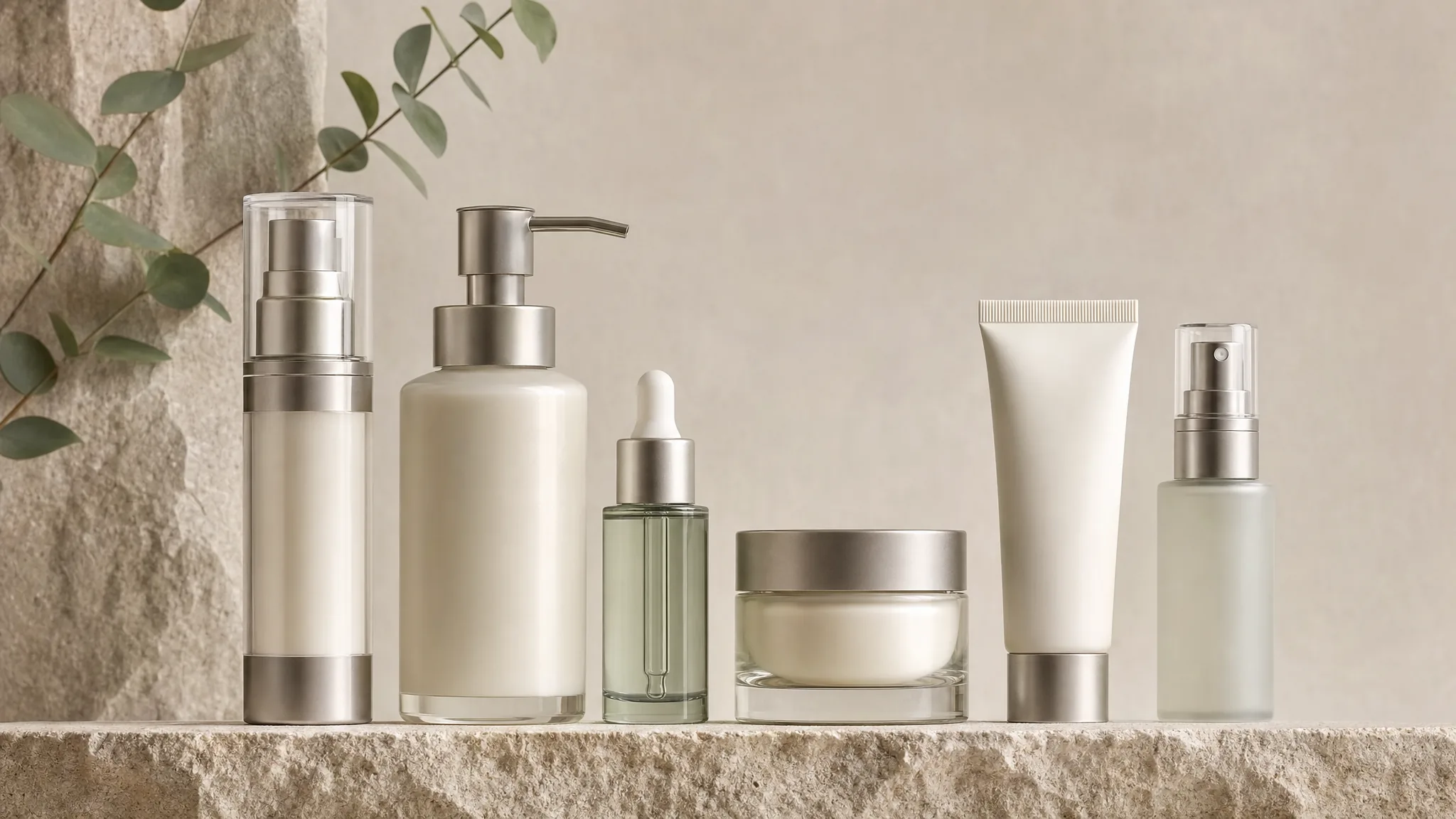
| Format | Common Fit | Key Buyer Checks |
|---|---|---|
| Lotion pump bottle | Lotions, cleansers and fluid creams | Viscosity range, dose, dip-tube reach and closure security |
| Airless pump | Products where controlled dispensing and reduced air exposure are priorities | Formula movement, priming, evacuation and component compatibility |
| Dropper bottle | Serums and low-viscosity products | Drop control, wiper fit, bulb performance and leakage |
| Jar | Thicker creams, balms and masks | Opening size, liner, contamination exposure and user handling |
| Tube | Creams, gels, cleansers and targeted products | Squeeze force, seal, cap choice, decoration area and evacuation |
| Mist or spray | Low-viscosity liquids designed for spray application | Spray pattern, clogging risk, dose and closure protection |
These are selection cues, not test conclusions. Final decisions require samples and checks using the intended formula and component combination. Buyers comparing serum formats can also review Aiyan Bio’s face serum products; broader format planning is available through the skincare product catalogue.
Packaging Decoration and Finishing Options
Decoration affects unit appearance, artwork durability, component handling and project complexity. The brief should specify what matters most instead of collecting every available finish.
- Screen printing: direct-to-component branding with a clean result; artwork, surface and color registration need review.
- Hot stamping: metallic or pigmented accents that can create contrast; fine details and component geometry matter.
- Frosted finish: softens a clear surface and changes tactile perception; consistency should be checked across the range.
- Metallization: produces a reflective metallic effect but adds processing and inspection considerations.
- Pressure-sensitive label: flexible for artwork and information changes; label stock, adhesive, edge finish and application accuracy affect the result.
- Sleeve: offers broad decoration coverage; shrink behavior, seams and recyclability communication need evaluation.
- Coating or custom color: can unify a product family; approved color standards and production tolerances should be documented.
What Should Brands Check Before Approving Packaging?
Before approval, check the intended formula and the complete packaging system together. A visual sample alone cannot confirm dispensing, transport or artwork performance.
- Formula and component compatibility
- Leakage under the agreed evaluation conditions
- Closure fit and alignment
- Pump, dropper or spray performance
- Artwork content, placement and legibility
- Color consistency between components
- Primary pack and carton fit
- Shipping protection and component movement
- Target-market labeling requirements
Record who approves each item and which sample or artwork version was reviewed. Packaging approval should also be aligned with the wider private label skincare manufacturing process.
Luxury Packaging vs Cost Control
Luxury does not require maximum customization. A buyer can concentrate investment where customers see or feel it, while keeping the underlying system manageable.
| Decision level | Approach | Potential impact | Buyer trade-off |
|---|---|---|---|
| High-impact | Standard bottle plus disciplined color, print and closure selection | Creates a coherent range without redesigning every component | Requires careful artwork and color control |
| Medium-cost | Distinctive secondary carton, label stock or selective decorative accent | Adds shelf and unboxing presence | Adds materials, specifications and packing steps |
| Higher-complexity | Custom mold, multiple custom components or layered finishes | Greater differentiation potential | More tooling, sampling, coordination and change risk |
Reduce complexity by limiting component count, reusing a bottle family across products and deciding whether secondary packaging performs a necessary protective or communication role.
How Packaging Affects Shipping and Importing
Packaging choices change more than the product’s appearance. Glass weight affects shipment weight; large decorative shells can increase dimensional volume; fragile finishes may need dividers or protective wrapping. Loose components and cartons also need a packing plan that prevents scuffing and movement.
Importers and distributors should confirm how primary containers, closures, cartons and accessories are packed, and whether final labeling information is ready for the target market. Requirements vary by destination and product, so regulatory questions should be checked with qualified advisers rather than inferred from a generic packaging guide.
What Should a Brand Send to a Packaging Supplier or Manufacturer?
A useful packaging brief connects the product, pack and market. Buyers do not need every detail finalized, but they should identify decisions that are fixed, preferred or still open.
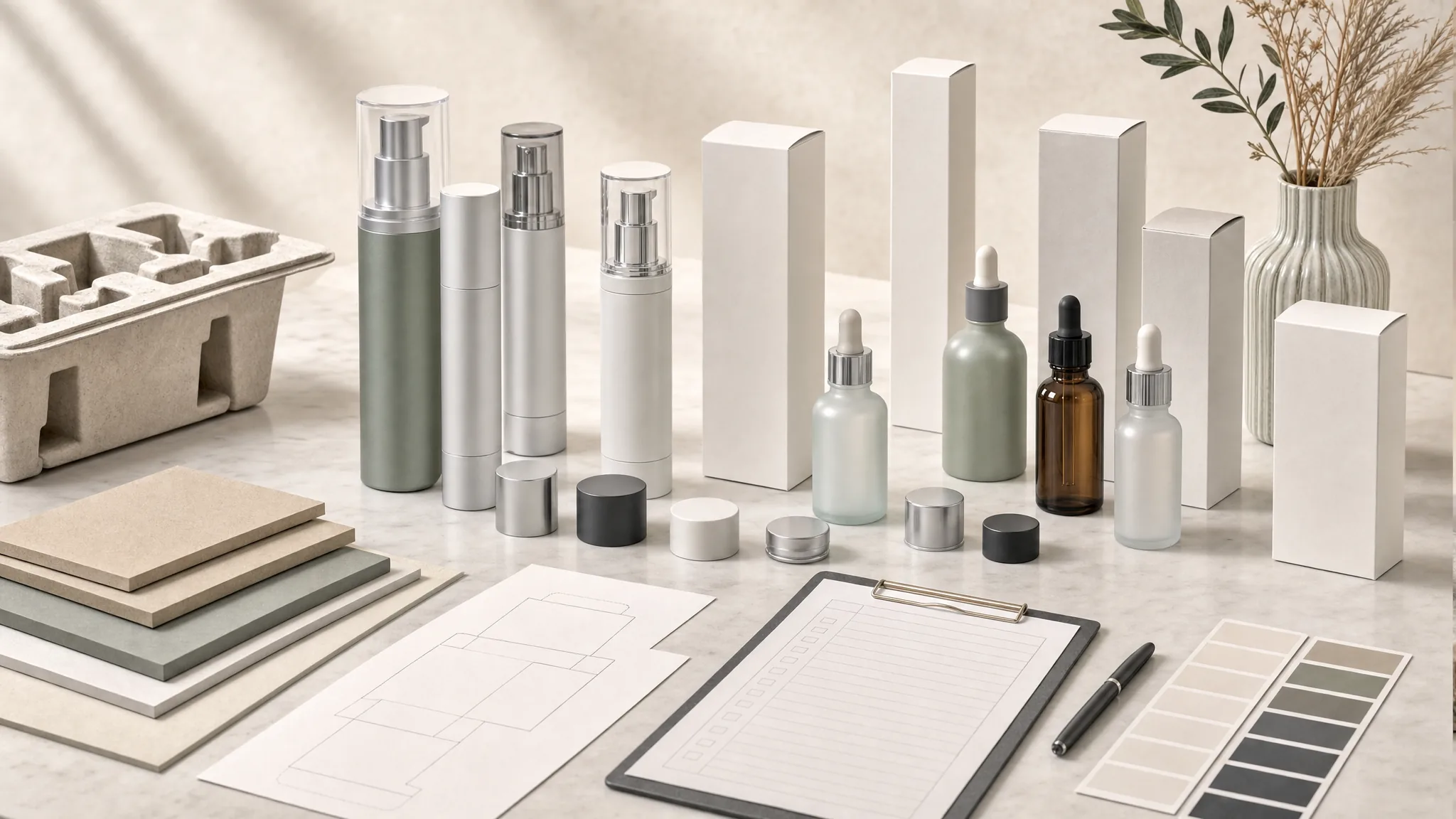
- Target product and product form
- Required fill volume
- Formula type and known handling needs
- Preferred material or reference pack
- Closure and dispensing preference
- Decoration and finish requirements
- Brand color references
- Artwork status and required label information
- Target market or markets
- Expected order scale for planning—not an assumed commitment
- Target launch timing for feasibility discussion—not a promised lead time
Common Luxury Skincare Packaging Mistakes
- Selecting the pack before considering formula compatibility. The visual direction may need to change once the formula and dispenser are evaluated together.
- Customizing too many components. Each extra color, collar, cap or insert creates another specification and approval point.
- Finalizing artwork too early. Panel size, print area, seams and regulatory copy can change after the component is confirmed.
- Ignoring carton dimensions. A small change to the primary pack can affect inserts, shipping cartons and pallet efficiency.
- Choosing heavy packaging without considering distribution. Weight and breakage exposure matter to importers and e-commerce brands.
- Confusing visual luxury with functional quality. A premium finish cannot compensate for inconsistent dispensing, leakage or poor closure fit.
How to Evaluate a Skincare Packaging Partner
Ask how the partner will coordinate the complete system, not just supply a bottle image. Evaluation points include:
- Component sourcing and traceability of specifications
- Coordination between formula, filling and packaging decisions
- Decoration options and artwork-control process
- Packaging inspection and approval checkpoints
- Communication when a component or finish changes
- Export documentation and packing support relevant to the destination
These questions can be used with any supplier. They do not imply that every manufacturer provides every service. Compare the answers against the needs of your product range, including face care or hair care formats.
Frequently Asked Questions
What packaging is best for skincare?
There is no single best material or format. The appropriate pack fits the formula, dispensing method, fill volume, target market, shipping route and brand position. Compare samples using the intended product before approving the complete system.
Is glass better than plastic for luxury skincare?
Glass can provide weight, clarity and a premium tactile feel, while plastic formats can be lighter and offer different dispensing options. Neither is automatically better. Buyers should compare compatibility, protection, usability, shipping, component complexity and local end-of-life conditions.
What is airless packaging?
Airless packaging is a dispensing system designed to move product without a conventional dip tube, often using a rising platform or bag mechanism. Its suitability and evacuation performance depend on the specific formula and component, so sample evaluation remains necessary.
How do brands choose skincare packaging?
Define the formula type, fill volume, dose, target market and distribution route first. Then shortlist material and dispensing formats, review decoration, evaluate samples, confirm artwork and carton fit, and document the approved component set.
What should be tested before mass production?
The evaluation plan may include formula compatibility, leakage, closure fit, dispensing, product evacuation, decoration and label performance, carton fit and shipping protection. The exact tests and conditions should be defined for the product, component and target market.
What is the most sustainable skincare packaging?
No material is universally the most sustainable. A meaningful comparison considers pack weight, material and component count, product protection, transport, refill or reuse design, component separation, and the recovery systems available in the sales market. Environmental claims should be specific and supportable.
Discuss Your Skincare Packaging Project
If you are planning a private-label skincare range, send Aiyan Bio your product type, fill volume, packaging reference, dispensing preference, decoration requirements and target market. The team can review the brief in the context of your product project and identify the packaging and manufacturing questions that need clarification.